The 5 Best Automatic Cat Litter Boxes of 2026
We compared the leading self-cleaning litter boxes on what actually matters at home: how safely they handle your cat, how much room they give, and how long you can walk away.
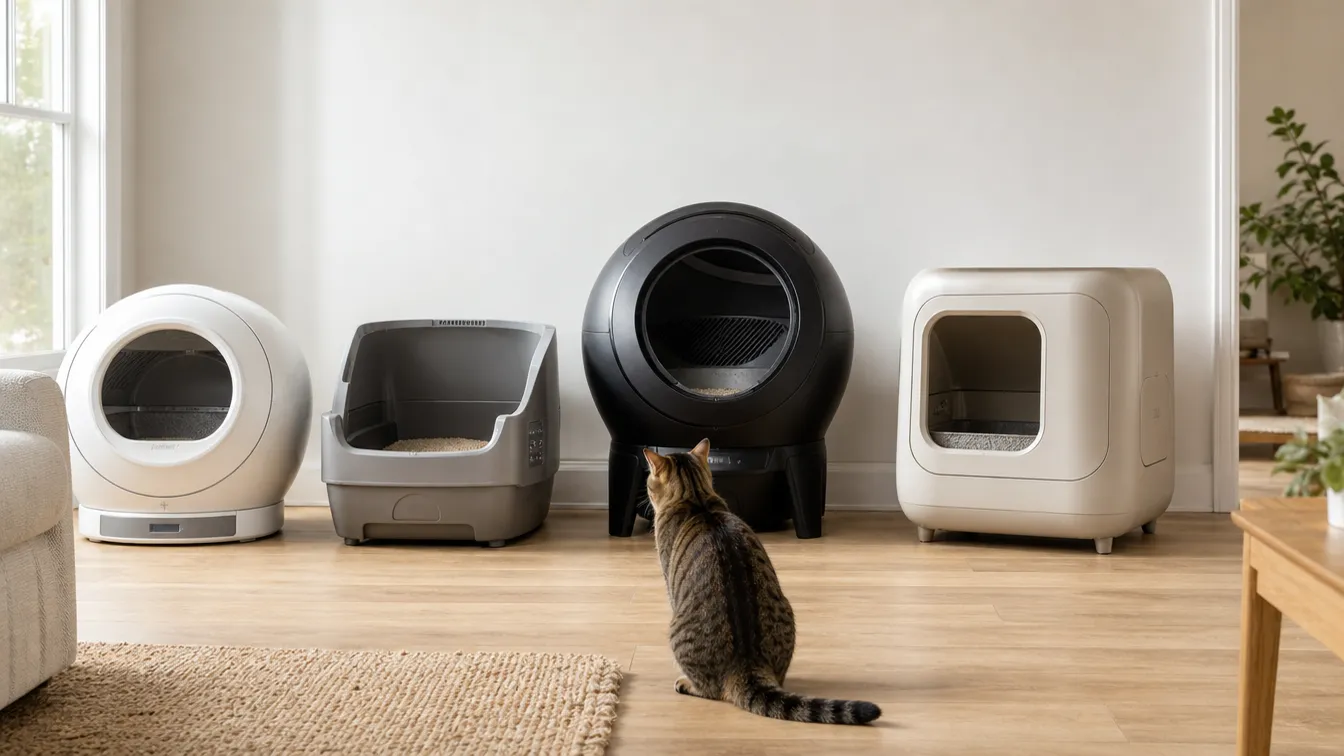
An automatic cat litter box rakes or rotates waste out of the clean litter after every visit and seals it in a bin, so you go from scooping every day to emptying a bag every week or two. The good ones also keep the smell down and log your cat's visits, which can flag health problems early.
The bad ones are noisy, fussy about litter, or start a cycle when they shouldn't. That's why we weighted safety design and space most heavily, then waste capacity, odor control and noise. Here is what made the cut.
Quick answer
The best automatic cat litter box for most homes is the Cumrige M2. It pairs a roomy 95L drum and a wide 2.2–33 lb cat range with infrared and weight sensors that pause the cycle, plus a 15L waste bin that can go up to about two weeks with one cat. If you want the most proven name, choose the Litter-Robot 4; for camera-based health tracking, the PETKIT Purobot Max Pro 2.
At a glance
Side-by-side comparison
| Cumrige M2 | Litter-Robot 4 | PETKIT Max Pro 2 | Neakasa M1 | PETLIBRO Luma | |
|---|---|---|---|---|---|
| Best for | Most homes, 1–2 cats | Up to 4 cats | Health monitoring, multi-cat | Large or hood-shy cats | Households with many cats |
| Design | Enclosed rotating drum, 95L | Rotating globe over base | Enclosed drum, 76L | Open-top tray | Enclosed, wide 17.4" entry |
| Cat weight | 2.2–33 lb | 3 lb minimum, no stated max | Multi-cat (see listing) | 2.2–33 lb | 2.2–22 lb |
| Waste bin | 15L (up to ~15 days, 1 cat) | Drawer, ~8 days (1 cat) | 8L sealed (claimed up to 17 days) | 11.23L (10–14 days) | 11L (~7 days for 2 cats) |
| Safety sensing | Infrared + weight | Laser curtain + weight + pinch | AI camera + weight + infrared | 5 infrared + 4 weight sensors | Camera + weight + infrared, anti-pinch |
| Camera | No | No | Yes, 1080p 210° | No | Yes, 1080p |
| App / Wi-Fi | Yes, 2.4 GHz | Yes, 2.4 GHz | Yes | Yes | Yes |
Specs from manufacturer listings and manuals as of Nov 18, 2026. Capacity figures are manufacturer claims.
The best automatic cat litter boxes
1. Cumrige M2 Automatic Self-Cleaning Litter Box
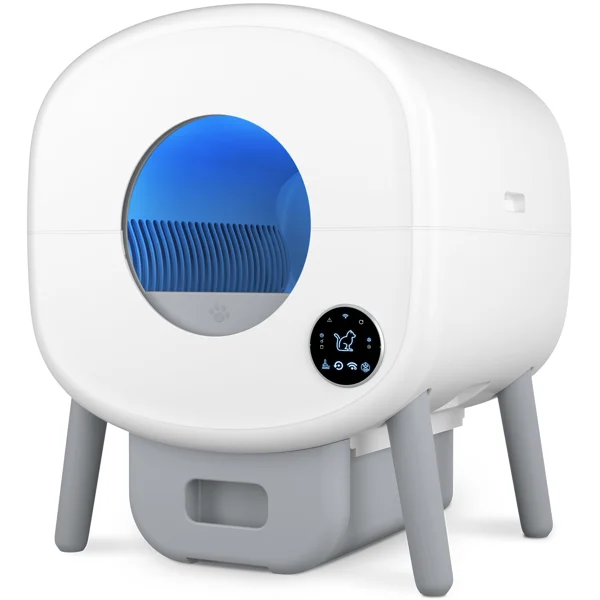
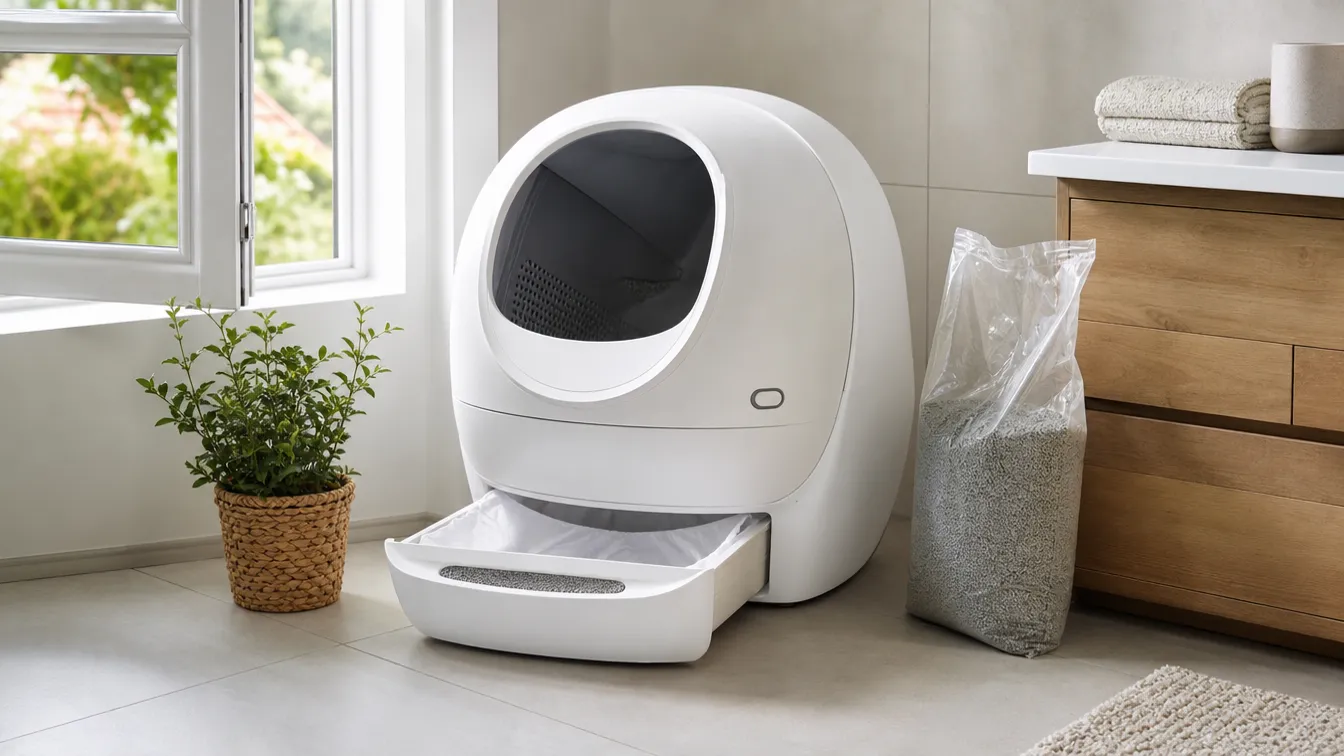
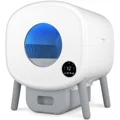
The Cumrige M2 does the fundamentals better than its size and simplicity suggest. The 95-liter drum is the largest in this lineup, which matters more than it sounds: cats that feel cramped in a globe are the ones that start going on the rug. The listed cat range of 2.2 to 33 lb covers small adults through big breeds.
Safety is handled two ways. Infrared sensors watch the entrance and a weight scale under the drum detects when a cat steps in; if either trips during a cycle, the drum stops. The same scale feeds the app, so you get per-visit weight and usage logs without paying for a camera model. The 15-liter sealed waste bin is the other headline: Cumrige rates it for up to around 15 days with one cat, which is longer than most enclosed boxes here.
Owners consistently mention quick setup, quiet cycles and good odor control from the sealed bin and deodorizer. The recurring caveats are worth knowing before you buy: the entrance sits fairly high, so older or short-legged cats may appreciate a step; the drum can throw a jam or “pinch” error if the litter level is uneven or overfilled; the app only connects over 2.4 GHz Wi-Fi; and a few owners of very large cats (15 lb+) find the opening snug even though the drum itself is roomy.
{{PICK_BOX}}What we like
- Largest drum in our lineup (95L)
- 15L waste bin with up to ~15 days between emptyings
- Infrared + weight sensing pauses the cycle
- Weight and visit tracking in the app
- Works with clumping bentonite and mineral litter
Keep in mind
- Entrance is fairly high for seniors and kittens
- Uneven or overfilled litter can trigger drum errors
- 2.4 GHz Wi-Fi only
- Opening can feel snug for some cats over 15 lb
Skip it if: you use pellets, paper or non-clumping litter, or you have a very small kitten under 2.2 lb.
2. Whisker Litter-Robot 4
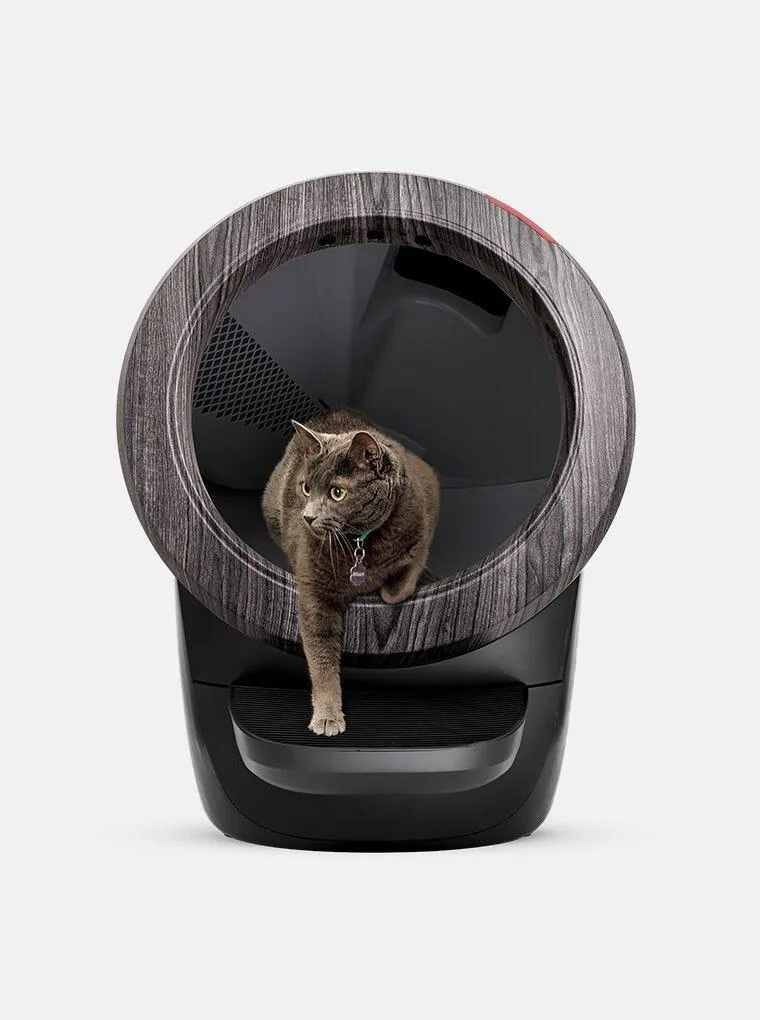
The Litter-Robot 4 is the reference point for the whole category. Its globe rotates to sift clumps into a sealed drawer below, a laser curtain and a weight-based SmartScale detect cats, and the Whisker app shows litter level, drawer fullness and each cat's weight. Whisker rates it for up to four cats with a 15.75-inch square entry and a 3 lb minimum cat weight.
It's also big (22 x 27 inches of floor and about 29.5 inches tall) and the drawer is smaller than our #1's, needing emptying roughly every eight days with one cat. You're paying for polish, support and a long track record.
What we like
- Mature, well-reviewed app
- Handles up to 4 cats
- Large, square entry
- Strong owner community and support
Keep in mind
- Large footprint
- Waste drawer needs emptying more often than our top pick
- Premium-priced accessories and plans
Skip it if: floor space is tight or you'd rather not pay for the brand name.
3. PETKIT Purobot Max Pro 2
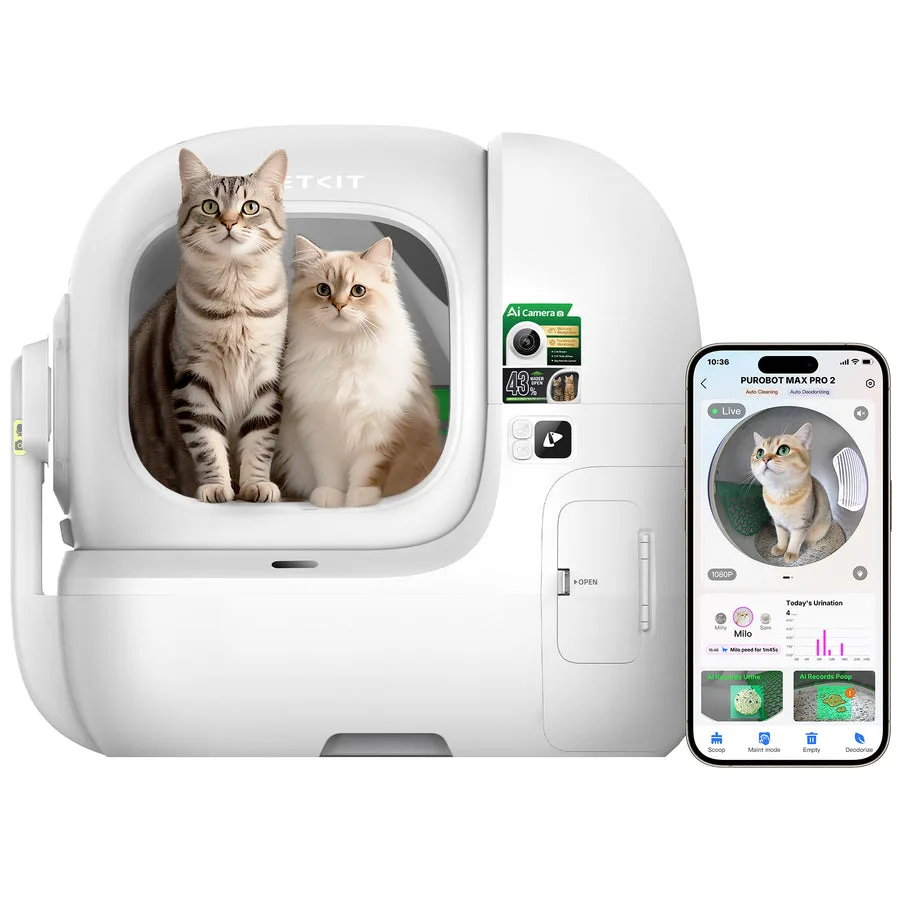
If the main reason you want an automatic box is to keep an eye on your cat's health, the Purobot Max Pro 2 goes furthest. A 1080p AI camera with a wide field of view recognizes individual cats, records visits, and PETKIT's app adds stool monitoring (and urine pH readings with their own indicator litter). The redesigned version has a larger, lower entrance than the original.
The trade-offs: a camera pointed at the litter box isn't for every household, the app is feature-dense, and the extra intelligence means more to set up and maintain.
What we like
- Camera-based visit and stool logging
- Recognizes individual cats
- Larger entry than the previous model
- Sealed bin with long claimed interval
Keep in mind
- Camera in the litter area won't suit everyone
- Complex app with a learning curve
- Smaller drum than our top pick
Skip it if: you just want the litter gone and don't need health analytics.
4. Neakasa M1 Open-Top
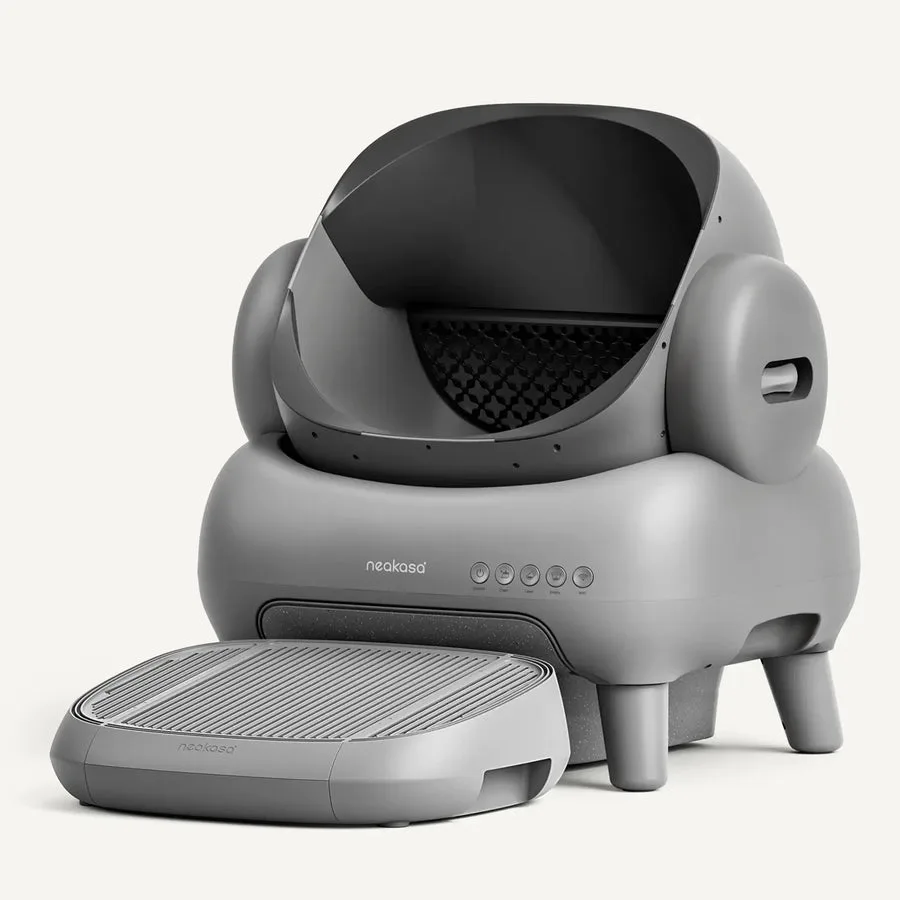
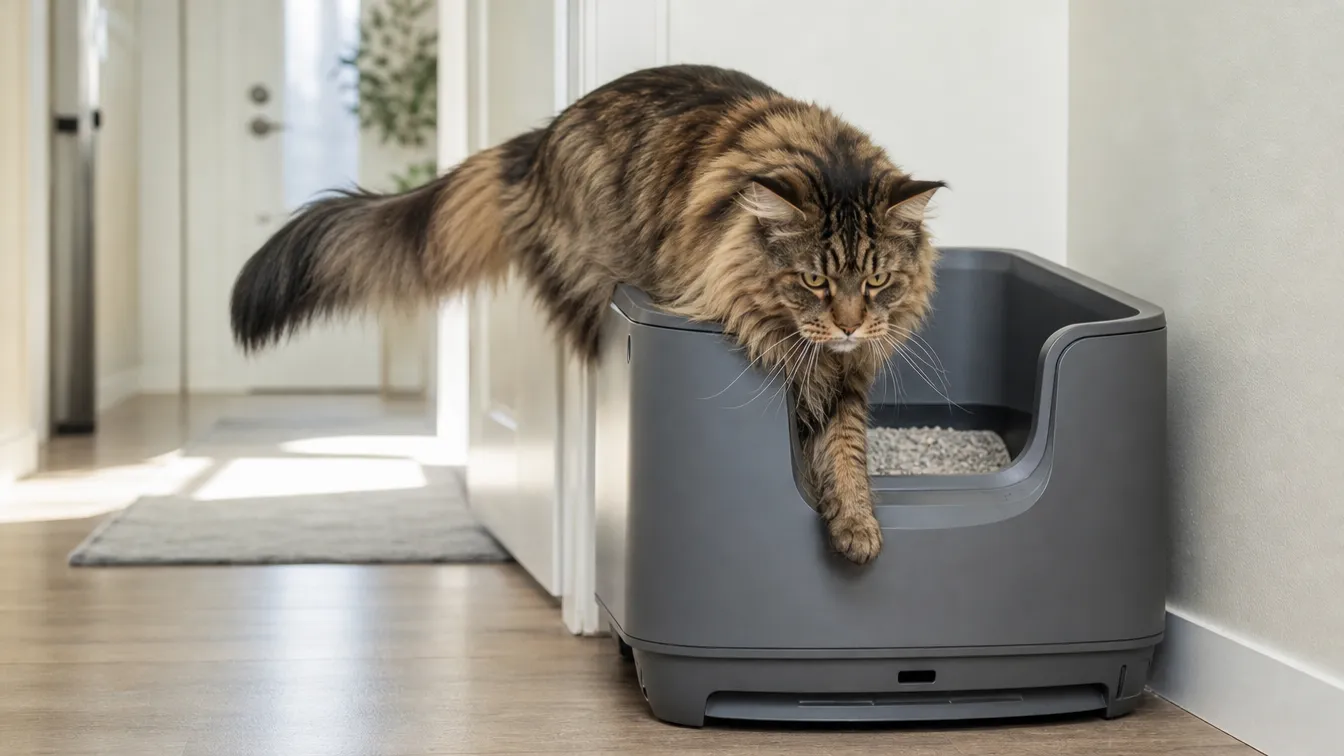
Some cats simply won't walk into an enclosed drum. The Neakasa M1 skips the hood: the cat steps into an open tray, and the machine sifts after they leave, using five infrared and four weight sensors to confirm the coast is clear. Neakasa recommends it for cats from 2.2 to 33 lb, and the open design suits Maine Coons and Ragdolls that hunch in a globe.
Open means less containment: more litter scatter and less odor control than a sealed drum, and it's louder than most here at a rated 50 dB.
What we like
- Open design most cats accept quickly
- Great for big breeds
- Many sensors for a simple layout
- Large waste bin
Keep in mind
- Less odor containment than enclosed boxes
- More litter scatter
- Louder than our top pick
Skip it if: odor is your top concern or the box will sit in a living space.
5. PETLIBRO Luma Smart Litter Box
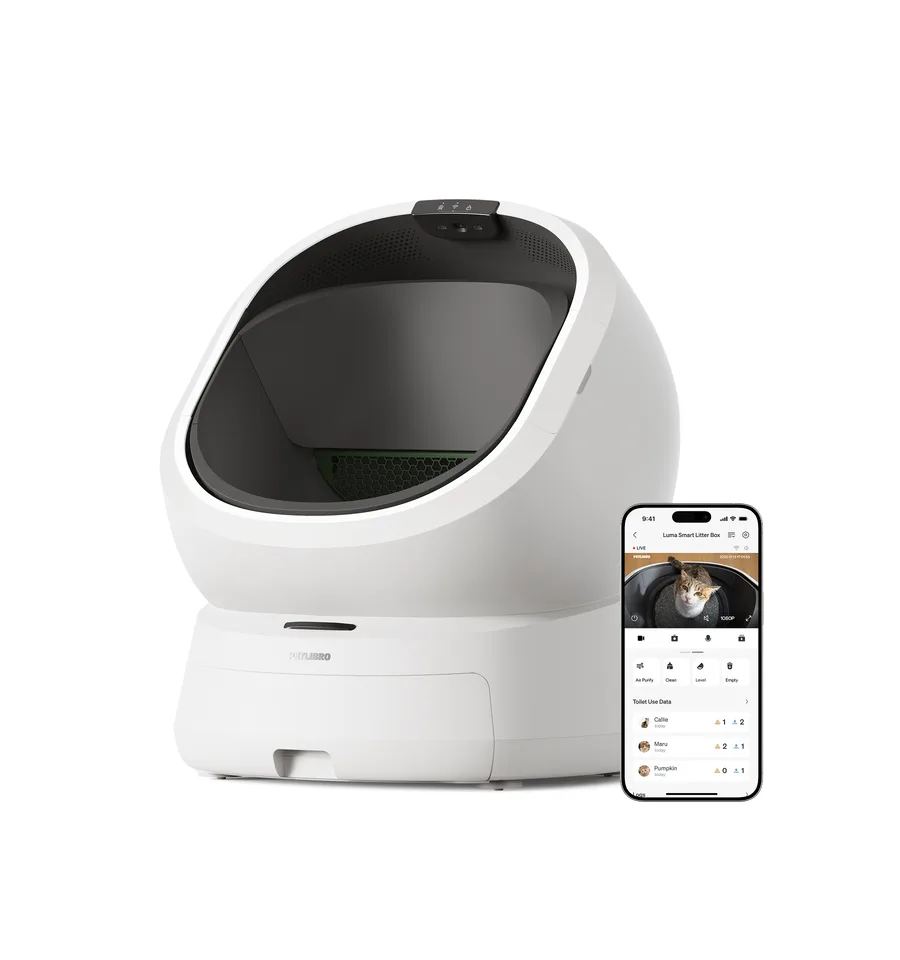
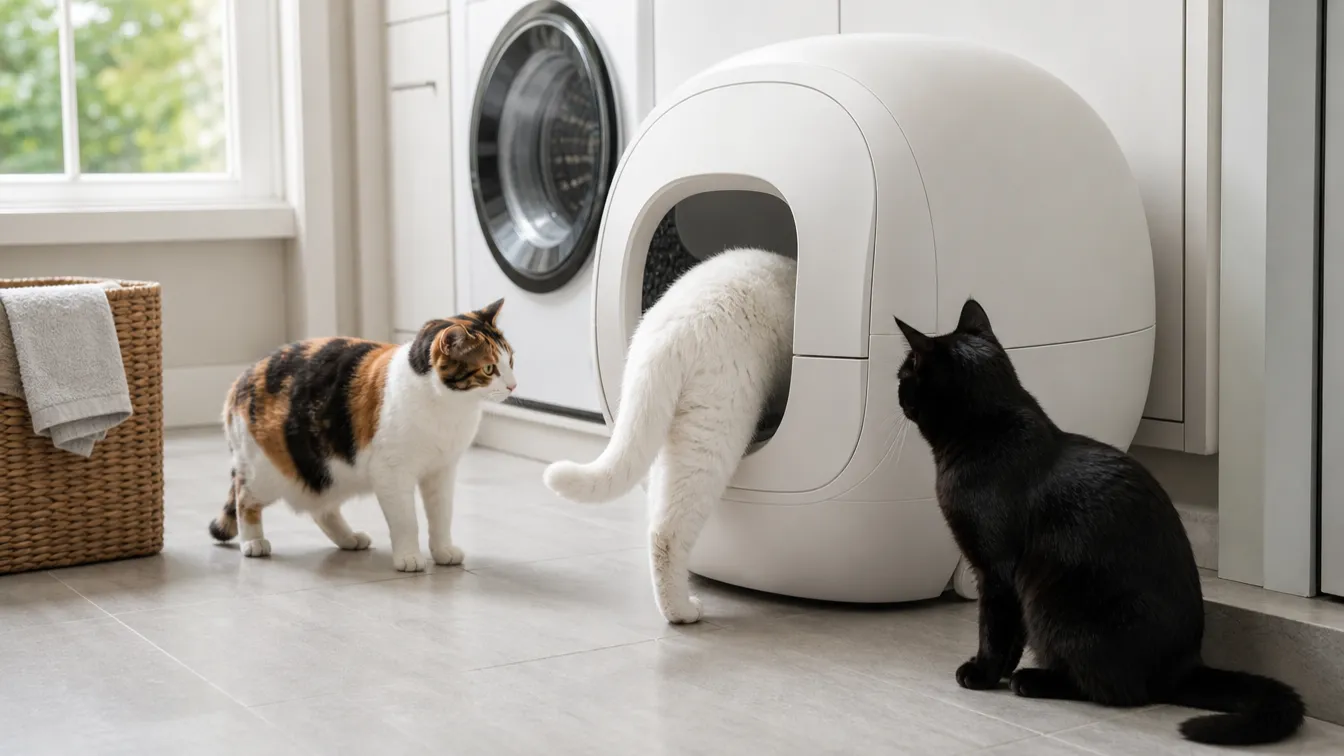
The Luma is built for busy households: its camera can tell up to 10 cats apart, logs each one's visits, and a triple safety check (vision, weight and infrared) pauses the cycle when a cat is detected. It runs 24/7 active airflow through a deodorizer for odor control.
Its limits: the 22 lb maximum cat weight is lower than our #1 and the open-top Neakasa, it must sit on a hard floor (not carpet) for the scale to work, and it's one of the heaviest units here at around 33 lb.
What we like
- Recognizes up to 10 cats
- Triple safety check
- Wide entry
- Active airflow odor control
Keep in mind
- 22 lb max cat weight
- Hard floors only
- Heavy and large
Skip it if: you have one or two cats and don't need a camera.
How we chose
We didn't run a lab. We researched: manufacturer specs and manuals for every model, months of owner feedback across retailers and cat-care communities, and published reviews from established pet publications. Then we scored eight criteria, weighting the first two most because they decide whether your cat uses the box at all:
- Safety design – how many independent ways the box detects a cat, and what happens mid-cycle.
- Space – drum volume, entrance size and the supported cat weight range.
- Waste capacity – realistic days between emptyings.
- Odor control – sealed bins, filters, airflow.
- Noise – important if the box lives near a bedroom.
- Litter compatibility and running costs.
- Setup and app reliability.
- Owner-reported reliability and support.
Full details are on our How we research page.
Automatic litter box buying guide
Safety: look for at least two independent sensors
A cycle that starts while a cat is inside is the biggest worry with any automatic box. The safest designs combine two different kinds of sensing (for example infrared plus a weight scale, or a camera plus weight) so one failing doesn't leave the cat unprotected. Also check the minimum cat weight: most boxes can't reliably detect cats under about 2–3 lb, so kittens should use manual mode until they are heavier. See our guide on whether automatic litter boxes are safe.
Space and cat size
Compare drum volume and entrance size, not just outer dimensions. Big breeds need a wide opening and room to turn; open-top designs suit cats that hate hoods. More in the best automatic litter box for large cats.
Waste-bin capacity
This decides how often you deal with the box. Bins range from about 8 to 15 liters; manufacturers' “days” figures assume one cat, so divide roughly by the number of cats. See our multi-cat guide.
Litter type
Nearly every automatic box needs fast-clumping litter (bentonite clay or similar mineral litter). Pellets, paper and crystals usually jam or don't sift. Keep the litter at the fill line – overfilling is the most common cause of errors.
Odor control
Sealed bins plus a carbon filter or deodorizer do most of the work; active airflow helps further. If your box smells, it's usually fixable – see why an automatic litter box smells.
Noise and placement
Quieter drums are better near bedrooms. Put the box on a hard, level floor so the weight sensor reads accurately, with clearance for the drum to turn and the bin to slide out.
Is it worth it?
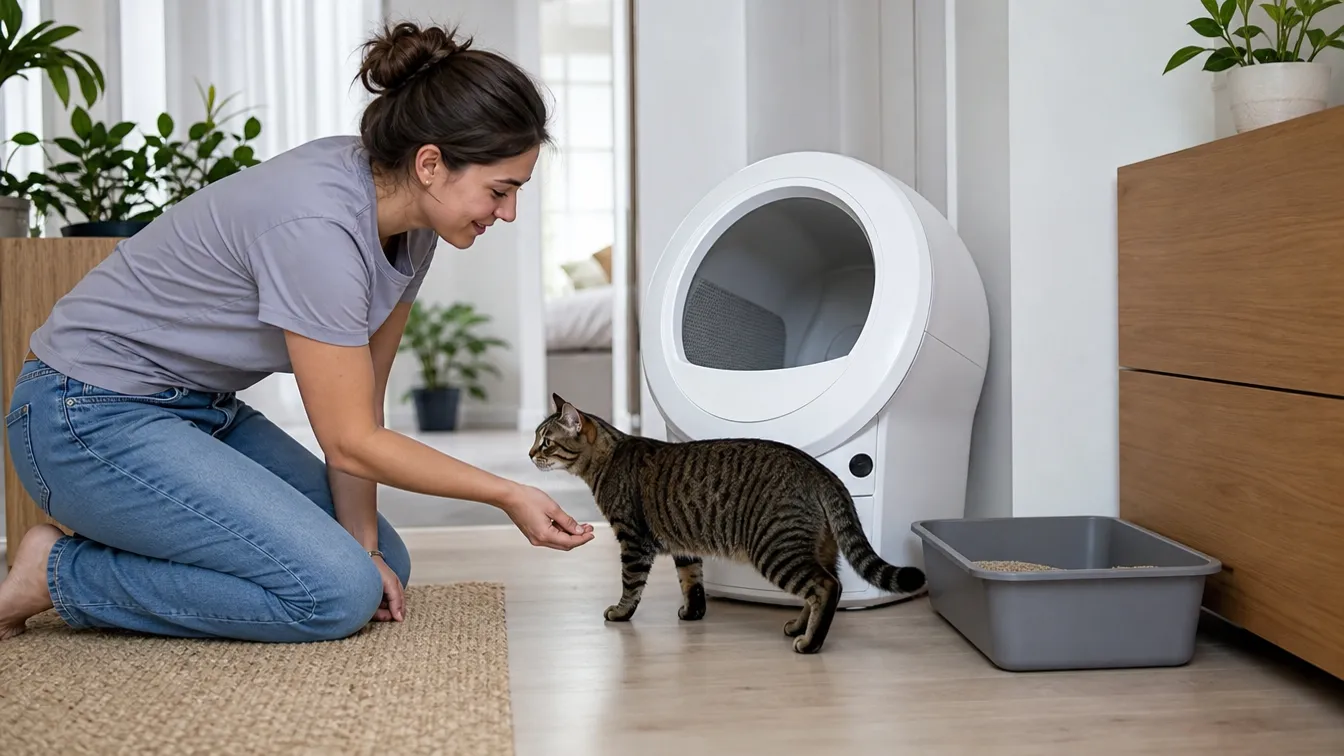
For most cat owners who hate daily scooping, travel occasionally, or want health data, yes. Read the full breakdown: are automatic litter boxes worth it? And when yours arrives, follow our step-by-step transition plan.
Frequently asked questions
What is the best automatic cat litter box in 2026?
Do vets recommend automatic litter boxes?
Is an automatic litter box really worth it?
Are automatic litter boxes safe for cats?
How often do you empty an automatic litter box?
What litter works in an automatic litter box?
What changed in this guide
- Nov 18, 2026: Guide launched with five picks; Cumrige M2 named best overall.