Are Automatic Litter Boxes Safe? Sensors, Kittens and What Can Go Wrong
How modern boxes detect your cat, why kittens need manual mode, and the checklist we use to judge safety.
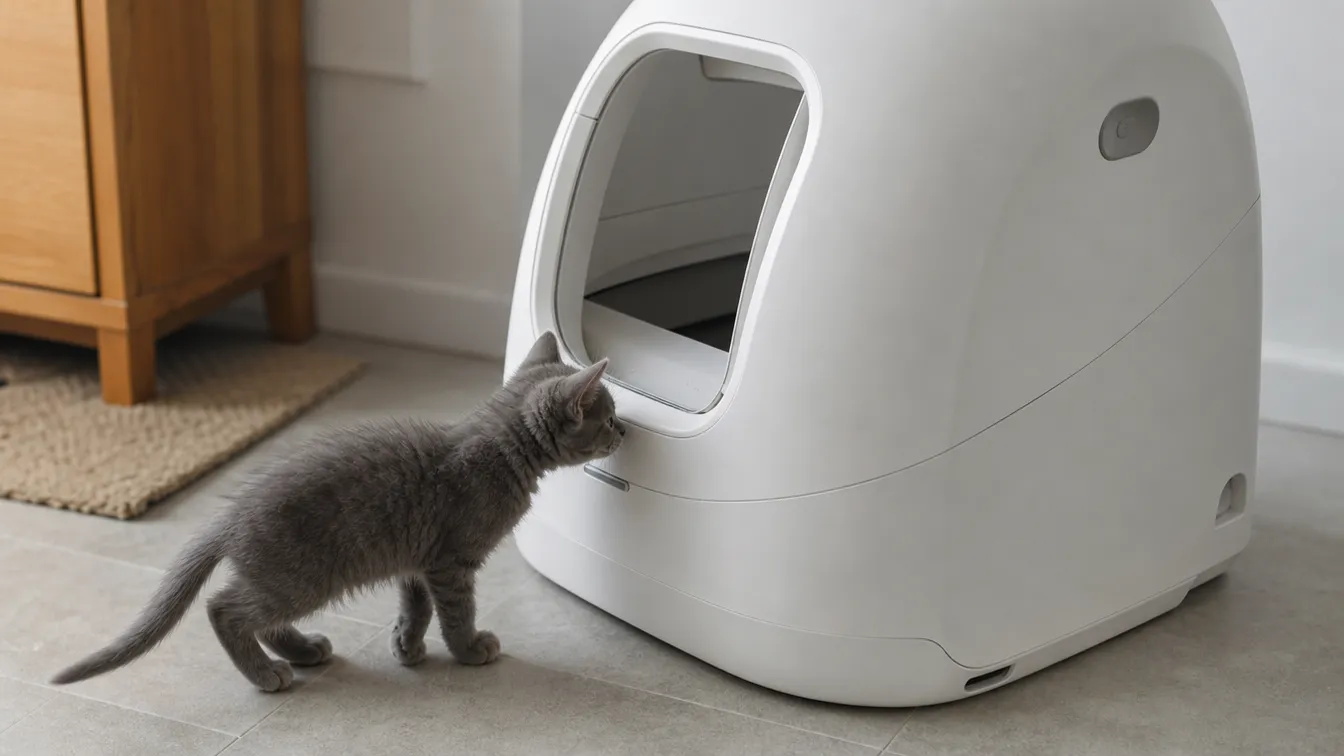
Modern automatic litter boxes are designed to be safe for adult cats, as long as the model uses more than one way to detect a cat and you follow its minimum weight. The risks come from older or bargain designs with a single sensor, from kittens too light to register, and from setup mistakes like overfilling litter or putting the box on carpet.
How automatic boxes detect your cat
- Weight sensors under the drum or tray register when a cat steps in, and also track weight in the app.
- Infrared or laser sensors watch the entrance and interior for movement.
- Cameras with AI recognition (on premium models) visually confirm the box is empty.
- Pinch or resistance detection stops the motor if it meets unexpected resistance.
Every cycle also waits several minutes after the cat leaves before it starts. The key idea is redundancy: if one sensor misses, another should catch it. That's why our top pick, the Cumrige M2, combines infrared with a weight scale, and why we rank boxes with a single sensing method lower.
Are automatic litter boxes safe for kittens?
Not in automatic mode until they're heavy enough. Most boxes list a minimum cat weight of around 2.2–3 lb; below that, the weight sensor may not register the kitten at all. Until then:
- Switch automatic cleaning off and trigger cycles manually when the kitten is out of the room.
- Or keep a regular litter tray for the kitten and let adult cats use the automatic box.
- Watch the kitten's weight; switch to automatic only once it's comfortably over the minimum.
The real-world risks (and how to avoid them)
Overfilled or uneven litter
Too much litter strains the motor and can confuse the weight reading. Fill to the line, level it, and top up rather than pour in a whole bag.
Soft or uneven floors
Carpet and rugs throw off weight sensors. Put the box on a hard, level floor or a rigid mat.
Curious second cats
In multi-cat homes a second cat may poke its head in mid-cycle. This is exactly the situation where entrance infrared sensors earn their keep.
Dirty sensors
Dust from litter can blind infrared sensors over time. Wipe them when you deep-clean the drum.
Power and Wi-Fi
Boxes keep working offline in most cases; Wi-Fi is for the app. If the power fails mid-cycle, check the drum position before your cat uses it.
Our safety checklist before you buy
- At least two independent cat-detection methods
- A clearly stated minimum (and maximum) cat weight
- Automatic pause plus an alert if a sensor fails
- A manual mode for kittens and transition periods
- A delay timer you can set

What about pregnant owners?
Pregnant people are usually advised to avoid handling cat feces because of the toxoplasmosis risk. A self-cleaning box reduces contact since waste is sealed into a bin, but someone else should ideally empty and clean it; ask your doctor for advice specific to you.
See how all five of our picks handle safety in our full ranking of the best automatic cat litter boxes.